
Startup costs often exceed personal savings, with expenses such as rent, inventory, and customer acquisition quickly adding up. For entrepreneurs considering where to get money for a business, selling equity is one option. However, it also means involving a new co-owner in business decisions. There are seven alternative ways to secure funding without giving up ownership.
How to find funding for a business
Business funding can come from various sources, including government support, financial institutions, and alternative financing providers. The following seven options allow entrepreneurs to raise capital while retaining ownership of their companies. Each comes with different eligibility requirements, documentation needs, and potential risks. The first option involves funding that generally does not need to be repaid.
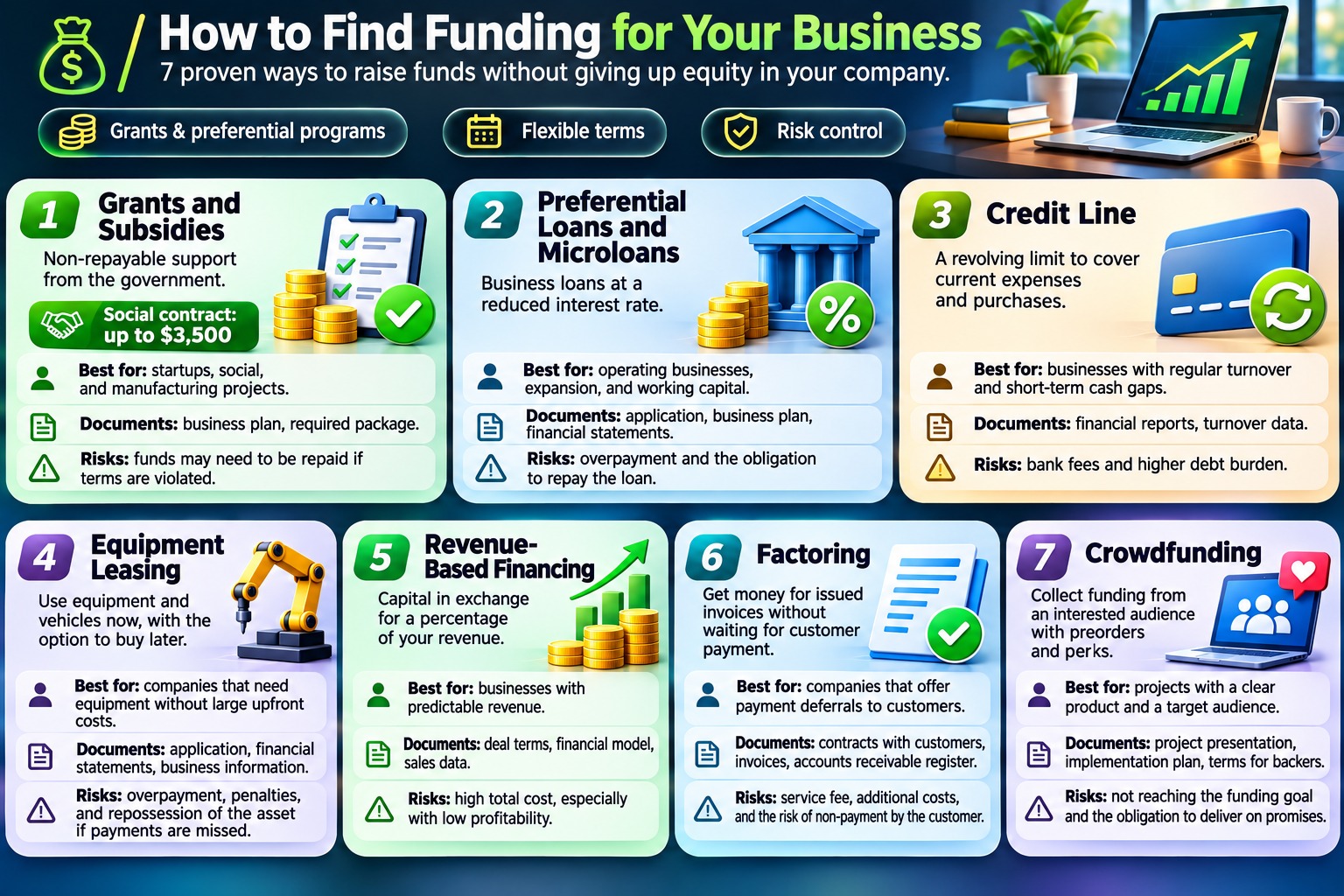
1. Grants and subsidies
Government agencies, regional authorities, and industry organizations offer grants and subsidies for starting businesses, purchasing equipment, and supporting social initiatives. Funding is often awarded through competitive selection processes. Applications may require a business plan, supporting documents, and commitments to specific performance targets. Using funds for unauthorized purposes can result in repayment obligations.
In the United States, some state and local economic development programs provide financial assistance to eligible small businesses. Across Europe, national and regional funding initiatives support entrepreneurship, innovation, and business development. Information about available opportunities can be found through government agencies, small business development organizations, and official funding portals.
2. Low-interest loans and microloans
Specialized lending programs help businesses expand operations, make investments, and finance working capital. Eligibility and loan terms depend on the industry, company size, and available program funding. Smaller amounts may be available through nonprofit lenders, community development financial institutions, and regional microfinance organizations.
Credit guarantee programs can sometimes help businesses qualify for financing when sufficient collateral is unavailable. Before applying, it is important to compare the total borrowing cost, fees, repayment schedules, and eligibility requirements. A reduced interest rate does not eliminate the obligation to repay the loan.
3. Business line of credit
When cash flow becomes tight, determining where to find money for a business is particularly important for covering supplier payments and operating expenses. A revolving business line of credit can provide flexible access to funds. Businesses can borrow up to an approved limit, repay outstanding amounts, and access the available credit again if the agreement allows it. For example, funds can cover inventory purchases before customer payments arrive.
Interest is generally charged only on the amount borrowed, although additional bank fees may apply. Lenders typically assess business revenue, financial stability, and credit history before approving a credit line.
4. Equipment leasing
Equipment leasing allows businesses to use vehicles, machinery, and commercial equipment without paying the full purchase price upfront. A leasing company purchases the assets and provides them for use in exchange for regular payments. Depending on the agreement, ownership may be transferred at the end of the lease term.
When comparing offers, important factors include upfront payments, total financing costs, insurance, maintenance responsibilities, and usage restrictions. Late payments may result in penalties or repossession of the leased equipment.

5. Revenue-based financing
Some financing providers offer capital in exchange for an agreed percentage of future revenue. Payments fluctuate with business performance, and fixed monthly installments may not be required. This arrangement generally allows business owners to retain full equity ownership.
Revenue-based financing is less common than traditional bank lending. Agreements should clearly define how payments are calculated, the total repayment cap, and what happens when sales decline. For businesses with narrow profit margins, this financing model can become particularly expensive.
6. Invoice factoring
Invoice factoring helps businesses get paid faster when customers pay after receiving goods or services. A factoring company pays most of the invoice amount upfront. This gives businesses access to cash without waiting for customers to pay.
Factoring can improve cash flow, but it comes with fees. Businesses should compare costs, check when the remaining balance will be paid, and understand who is responsible for unpaid invoices. In some cases, the business must repay the factoring company if a customer fails to pay.
7. Crowdfunding
Reward-based crowdfunding works well for projects with a clear product and an interested audience. Supporters can receive preorders, early access, or special rewards instead of company shares. Crowdfunding also helps businesses test demand before launching a product.
A successful campaign needs a clear presentation, good promotion, and a realistic plan for delivering rewards. Unlike equity crowdfunding, reward-based crowdfunding does not involve selling company shares. Equity crowdfunding also follows different legal and regulatory rules.
Which option to choose
Determining where to secure money for a business starts with identifying the purpose of the financing. Grants and subsidies are worth exploring first, particularly for eligible startups and innovative projects. Equipment leasing can simplify asset purchases, while a business line of credit helps cover temporary cash flow shortages. Invoice factoring can address delayed customer payments. Any borrowing arrangement requires careful evaluation of repayment capacity, total costs, and potential financial risks.