
Starting a business takes more than a good idea. It requires financial skills, market knowledge, and a willingness to take responsibility. Even a promising idea can lead to losses if mistakes are made early on.
Before launch, it is worth assessing skills, workload, and potential risks. Income often drops after leaving a salaried job. Personal savings can help cover living costs until the business starts to generate a steady income.
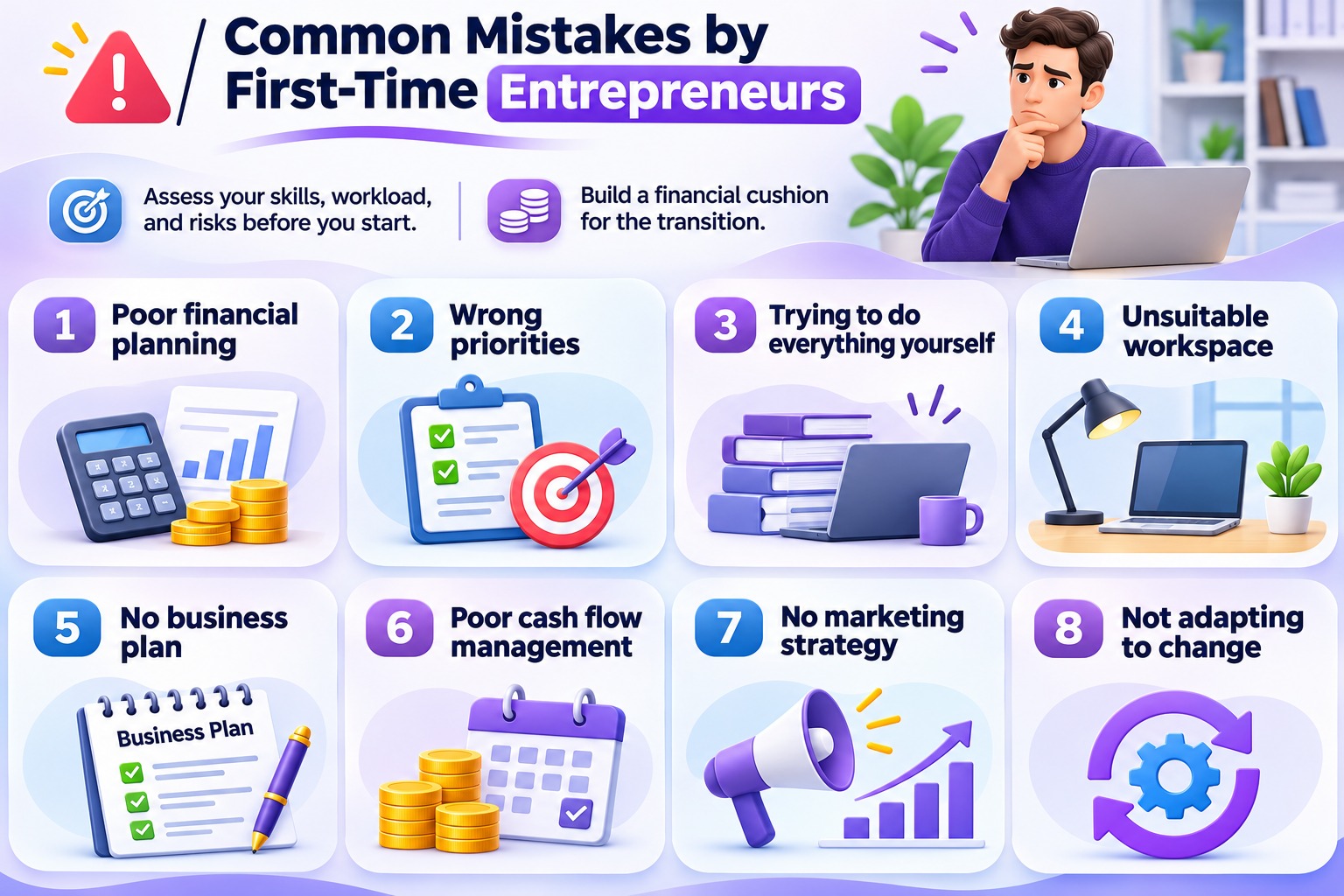
1. Poor financial planning
New entrepreneurs often underestimate startup costs and expect to make a profit quickly. However, rent, equipment, supplies, taxes, and advertising can take up a large part of the budget.
A startup budget should include both one-time and monthly costs. A sales forecast can show how much revenue the business needs to break even. Setting aside extra funds for unexpected expenses can also reduce financial risks.
2. Setting the wrong priorities
Spending weeks on logo design, office decor, and other minor details can take time away from more important tasks.
The main goals are to attract customers, test market demand, and fulfill orders on time. Brand design can be improved once there is clear demand for the product or service.
3. Trying to do everything alone
Managing every part of a business can lead to stress, poor performance, and burnout. A lack of experience also increases the risk of costly mistakes.
Accounting, legal matters, and technical tasks are often best left to qualified professionals. Hiring freelancers or outside service providers can reduce the workload without the need to hire more full-time staff.
4. Choosing the wrong workspace
Working from home can make it hard to focus due to everyday distractions. At the same time, renting an office too early can put pressure on a limited budget.
A separate room at home, a coworking space, or a small office may be a better option. The choice depends on the type of business and its needs. A clear work schedule helps maintain a healthy balance between work and rest.

5. Lack of a business plan
Without clear goals, it becomes harder to make sound decisions and measure progress. A business plan should describe the product, main competitors, target customers, sales channels, and expected revenue.
Choosing a legal structure is another key step. Common options include a sole proprietorship, partnership, or limited liability company. The choice depends on local laws. Other tasks include checking tax rules, obtaining the required permits, and protecting intellectual property.
6. Poor cash flow management
Even a profitable company can run out of cash. Late customer payments and large stock purchases can cause financial problems. The risks also increase when several bills are due at the same time.
A payment schedule can help track incoming funds, upcoming bills, and unpaid invoices. Before taking out a loan, it is important to check existing debts, interest rates, fees, and the total cost of borrowing.
7. Lack of a marketing strategy
Advertising without a clear understanding of customer needs often leads to wasted money. A marketing plan should explain what makes a product different from similar offers. It should also identify the best ways to reach potential buyers.
Search engines, social media, online maps, and marketplaces can help attract customers. Key measures of success include the cost of gaining a new customer, the number of orders, and the return on marketing spend.
8. Failure to adapt to change
Following the original business plan too closely can limit growth. Customer demand may fall, operating costs may rise, and competitors may introduce new products.
Regular sales reviews and customer feedback can help identify problems and new market trends. Testing new products or services can also provide useful insights. The results can help businesses adjust prices, improve their product range, and find better ways to reach customers.