
A business model shows how a company makes money. It explains what value customers receive and what resources the company needs. A business plan describes how to start and grow a business. A business model focuses on how the company earns revenue. Business success depends on market demand, available resources, and industry trends.
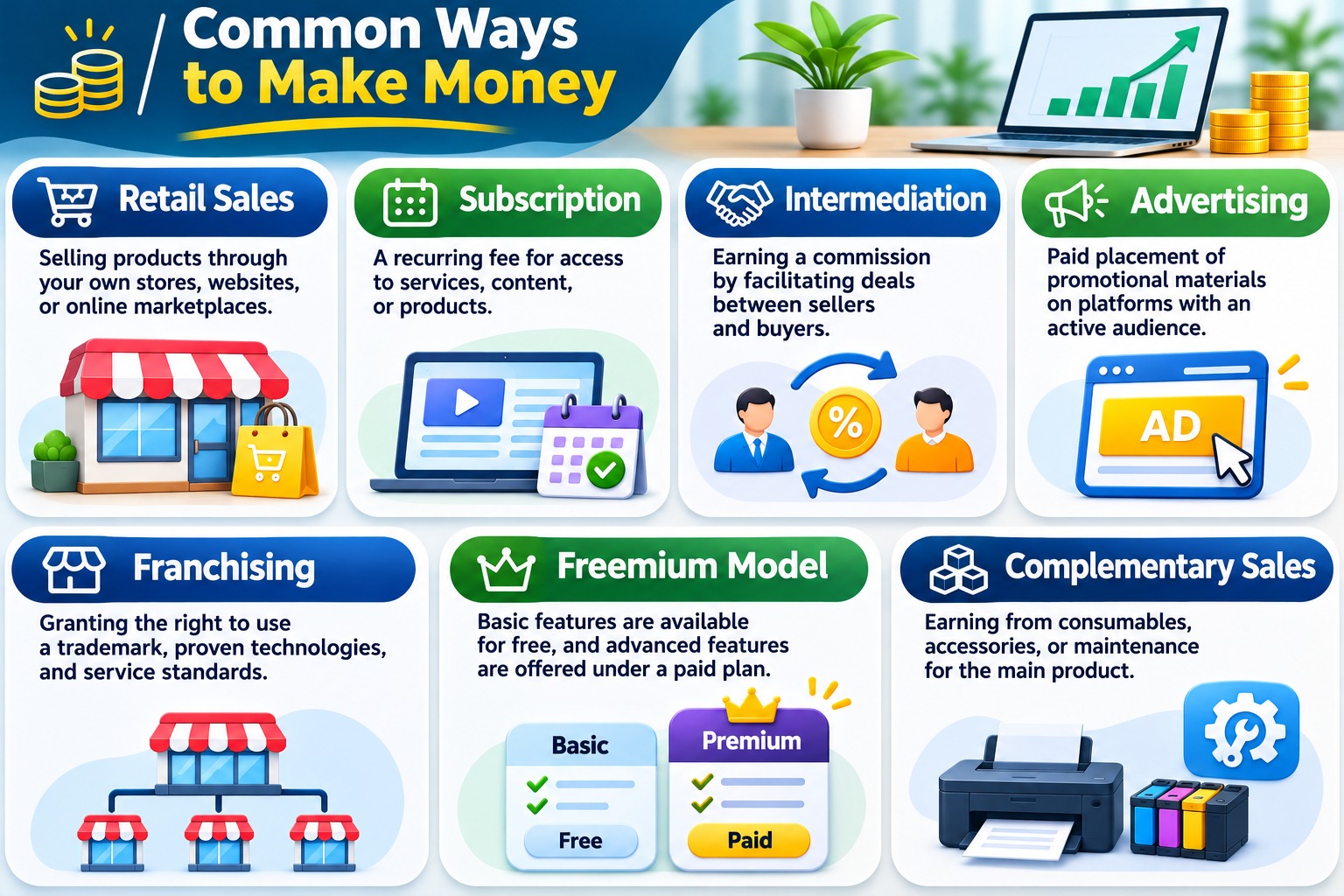
Common ways to make money
Retail — selling goods through stores, websites, or online marketplaces.
Subscription — charging a regular fee for access to products, services, or content.
Commission — earning a fee for connecting buyers and sellers.
Advertising — charging businesses to display ads on popular platforms.
Franchising — allowing other businesses to use an established brand and its business practices for a fee.
Freemium — offering basic features for free and charging for extra features.
Additional sales — selling spare parts, accessories, supplies, or maintenance services.
Business advice, equipment rental, and cloud services can also generate income. Having several sources of revenue reduces financial risks.
What to consider when choosing a business model
Clear business goals make it easier to choose the right model. These goals may include steady income, fast growth, or higher profits. Several key factors can help compare different options.
Market demand
A successful product meets customer needs. Buying habits and spending power also play an important role. Research into competitors and customer reviews can reveal gaps in the market. This information helps businesses create offers that stand out.
Costs and profits
A business must estimate product costs, average order value, fixed costs, and the cost of gaining new customers.
Contribution margin is the amount left after subtracting variable costs from revenue. The total margin earned from a customer should exceed the cost of gaining that customer.
Other key factors include the break-even point, the time needed to recover an investment, and working capital needs. A cash flow plan helps prevent cash shortages.

Growth potential
A scalable business can increase sales without a similar rise in costs. Software can simplify paperwork, accounting, and order processing. These tools save time and reduce manual work.
Outsourcing some tasks can also free up resources. However, regular quality checks remain important.
Flexibility and risk management
Changes in demand, prices, and customer habits can reduce profits. Planning for different scenarios helps businesses prepare for lower sales, late payments, and rising costs.
Access to several suppliers and sales channels makes a business more stable. It also allows companies to respond quickly to market changes.
Market rules and conditions
Online stores must consider marketplace fees, shipping costs, storage, returns, and product promotion.
Tax rules, payment systems, product labels, and data privacy also require attention. Business laws vary across the United States, Europe, and other global markets. Meeting local requirements helps avoid legal issues and unexpected costs.
Testing a business model
A small market test can reduce risks before a major investment. Businesses can launch a basic product, collect pre-orders, or offer a small range of goods.
The right success measures depend on the business model. Steady income matters for subscription services. Fast inventory turnover is important in retail.
Sales, conversion rates, repeat purchases, and actual profits help measure business performance.
An effective business model meets customer needs, generates profit, and keeps costs under control. It also offers room for growth. Regular reviews help businesses adapt to market changes and stay competitive.