
Business process automation (BPA) uses software to complete routine tasks with little human effort. It helps companies save time, cut costs, and reduce errors. It also allows staff to focus on more important tasks.
A business process is a set of steps that lead to a specific result. Common examples include sales, order processing, payments, and stock management.
Automation can cover a single task, a whole department, or several areas of a business. It is suitable for both small companies and large enterprises.
How business process automation works
Automation works through a set of rules. When a certain event occurs, the software starts a series of tasks. These tasks run without the need for constant human control.
For example, an online store receives a new order. The system checks stock levels, creates an invoice, and sends an email to the customer. It also shares order details with the shipping company. When stock runs low, the system can create a purchase request.
Businesses use a range of tools to automate daily tasks. These include CRM systems, cloud platforms, accounting software, and artificial intelligence (AI).
Main types of business process automation
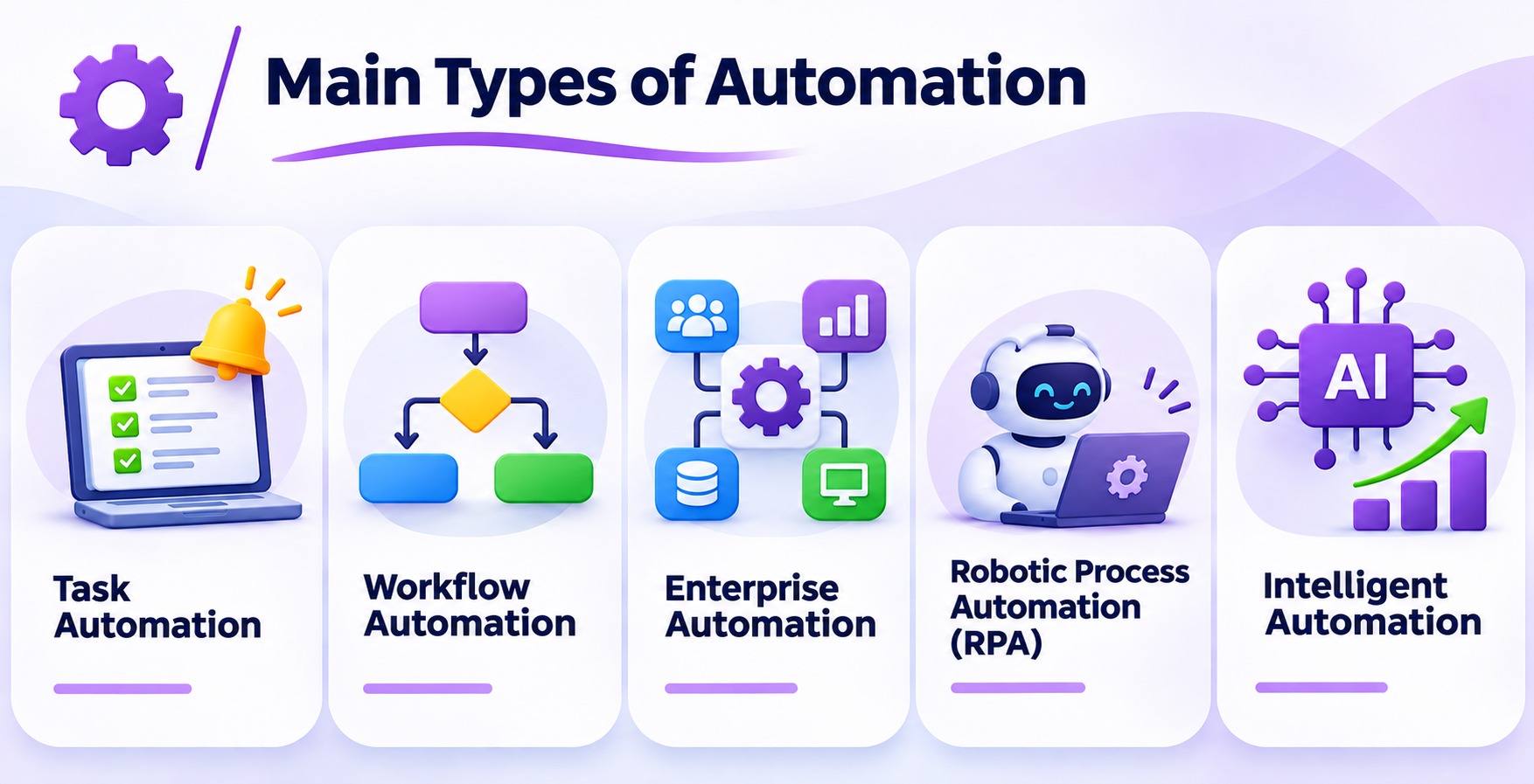
There are several types of automation:
- Task automation. Handles simple tasks such as sending emails, creating files, and updating records.
- Workflow automation. Links several tasks and ensures that each step takes place in the correct order.
- End-to-end automation. Connects different teams and software systems within a single process.
- Robotic process automation (RPA). Uses software bots to perform routine tasks based on set rules.
- Intelligent automation. Uses AI to study data, process files, predict demand, and solve more complex problems.
Automation is also part of business process management (BPM). This approach helps companies plan, track, and improve daily operations.

Where business process automation is used
Companies across the US, Europe, and other global markets use automation in many areas:
- Software collects customer data, processes orders, and creates invoices.
- Automated tools send emails, group customers, and track ad results.
- Systems process payments, manage payroll, and prepare reports.
- Automation helps track orders, monitor stock levels, and manage shipments.
- Human resources. Digital tools help manage staff records, track work hours, and onboard new employees.
- Customer service. Chatbots answer common questions, while software sends support requests to the right team.
Benefits of business process automation
Automation reduces the time spent on routine work. It helps staff complete more tasks and make fewer mistakes. Clear rules also make daily operations more consistent.
Businesses can lower operating costs, improve customer service, and track results more easily. Automation also helps companies grow without a sharp rise in staff workloads.
Low-code and no-code platforms make automation easier to set up. These tools require little or no coding. As a result, small businesses can adopt digital solutions without large IT teams.
How to implement business process automation
The first step is to review current business processes. This helps identify tasks that take too much time or often lead to errors.
The next step is to set clear goals and choose suitable software. New systems should work well with existing business tools.
Before launch, each workflow needs careful testing. Staff should also receive training on how to use the new system.
Cost, data privacy, and cybersecurity are key factors when choosing software. AI tools also need human oversight to prevent errors.
After launch, regular checks help measure results and find areas for improvement.
Business process automation helps companies work faster and use resources more wisely. With the right tools and clear goals, businesses can reduce costs, improve service, and support long-term growth.