
Steady sales growth depends on brand awareness, customer service, and effective marketing. Even with a limited budget, small businesses can find suitable marketing channels, increase demand, and strengthen their market position.
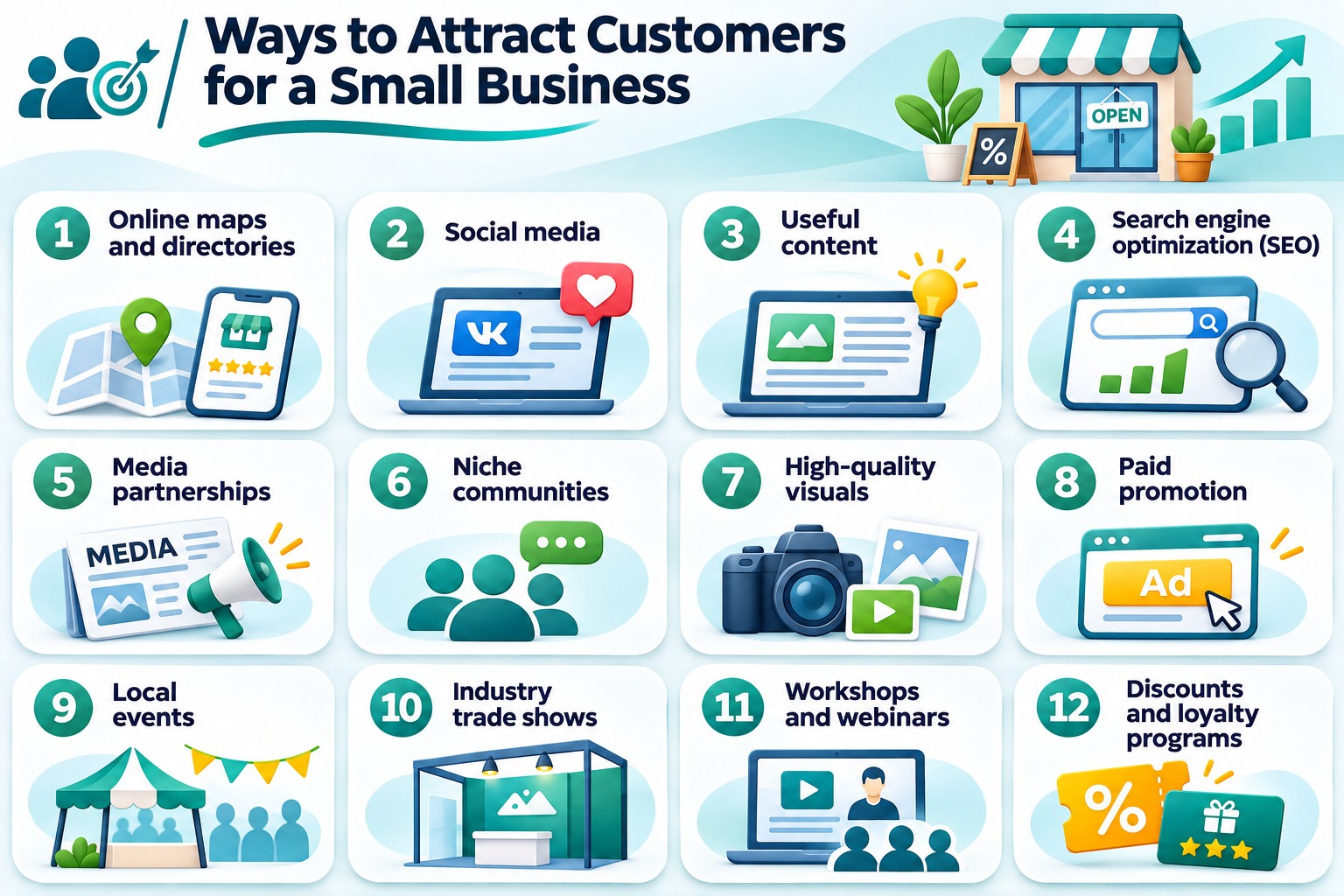
1. Online maps and business directories
Free business listings on Google Maps and Apple Maps make it easier to find nearby stores, repair shops, restaurants, and service providers. A business profile should include an address, phone number, opening hours, product range, and prices. Prompt responses to customer reviews help build a positive reputation.
2. Social media
Business pages on Facebook and Instagram help introduce new products, announce special offers, and receive orders. Regular posts, polls, and short videos keep audiences engaged. Quick responses to comments and messages also play an important role in customer satisfaction.
3. Helpful content
Educational articles, tutorials, product reviews, and practical tips demonstrate professional expertise. Informative content helps build trust before a purchase and highlights the benefits of products or services.
4. Search engine optimization
Higher search engine rankings attract more website visitors. Key factors include fast page loading, mobile compatibility, clear navigation, and content that matches relevant search queries. Marketing performance can be measured by the number of qualified leads.
5. Media outreach
Opening a new location, launching an innovative project, or supporting a charitable cause can provide an opportunity to publish a press release. Newsworthy stories attract the attention of local media outlets and increase brand exposure without significant costs.
6. Industry communities
Participating in professional discussions, exploring industry topics, and sharing expert insights help strengthen business credibility. Helpful answers and meaningful contributions are more effective than aggressive self-promotion.

7. High-quality visual content
Clear product photos, demonstration videos, and examples of completed projects help potential customers assess quality before making a purchase. A consistent visual identity improves brand recognition and helps businesses stand out from competitors.
8. Paid advertising
Search advertising through Google Ads attracts people actively looking for specific products or services. Platforms such as Meta Ads allow businesses to reach audiences based on location, age, and interests. Starting with a small budget and gradually increasing spending based on positive results helps reduce financial risks. Advertising campaigns must comply with applicable disclosure and transparency requirements.
9. Local events
Markets, festivals, and business networking events provide opportunities to establish personal connections. Joint promotions with complementary businesses help expand the customer base and increase brand awareness within local communities.
10. Trade shows
Trade shows offer opportunities to showcase products, find business partners, and generate new leads. Estimating potential expenses before attending helps determine whether participation is worthwhile. Promotional emails sent to collected contacts must comply with applicable consent, privacy, and anti-spam regulations.
11. Workshops and webinars
Hands-on workshops, live demonstrations, and consultations highlight the value of services and introduce potential customers to product features. This approach is particularly effective when selling complex products or solutions.
12. Discounts and loyalty programs
First-purchase discounts, free samples, and referral rewards encourage sales. Points-based loyalty programs help increase repeat purchases and improve customer retention. Profit margins should remain a priority when planning promotional offers.
Measuring marketing effectiveness
Combining several marketing strategies often delivers better results. Regular analysis of customer acquisition costs, order volume, and profitability helps allocate marketing budgets to the most effective channels.