
Buying an established business provides access to an existing customer base, equipment, and proven operations. However, reported revenue does not always mean strong profits. Understanding how to buy a business involves reviewing financial records, legal documents, and growth potential before signing a contract.
How to buy a ready-made business
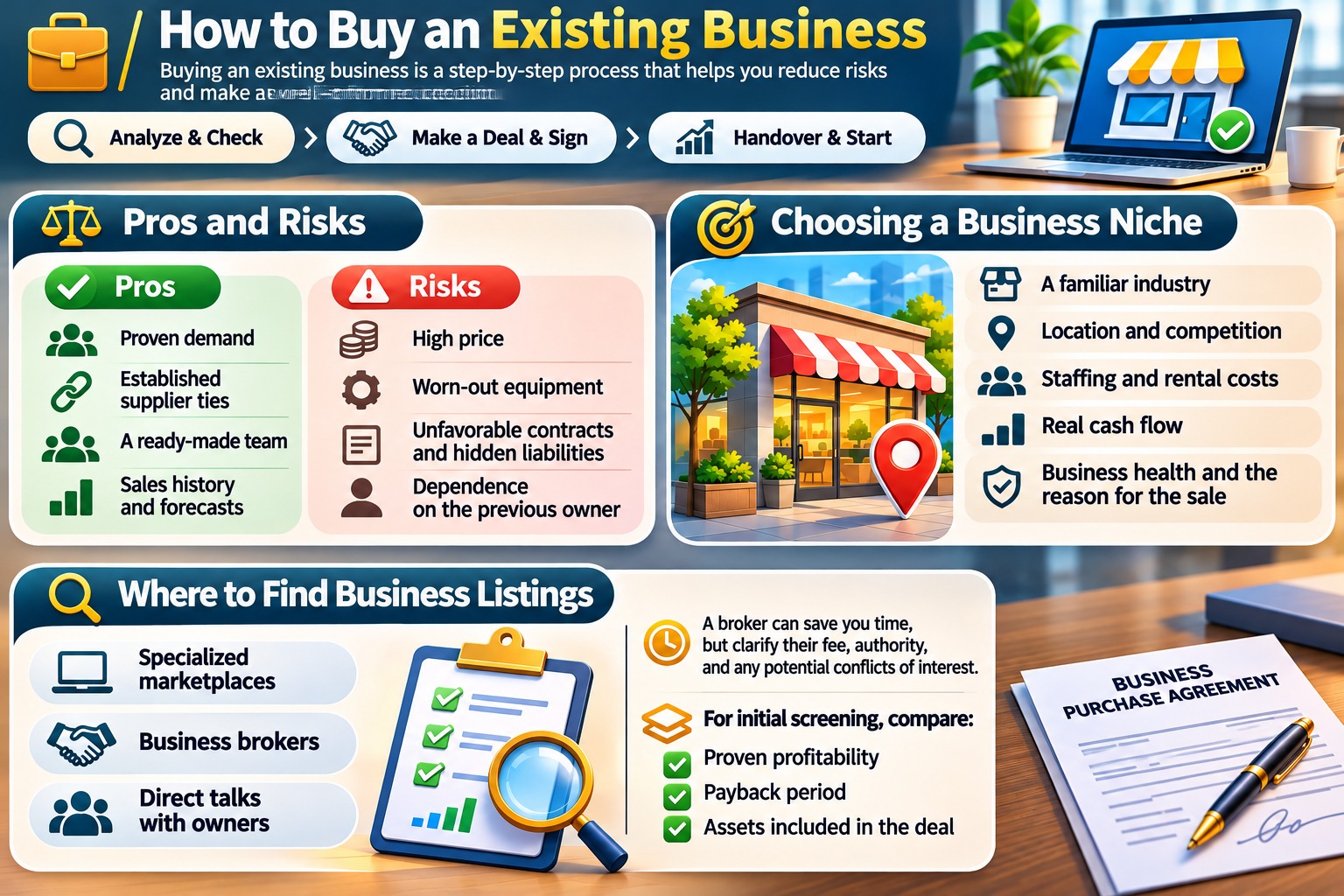
Buying an existing business involves several steps. Each step helps reduce risks and supports informed decisions.
Benefits and risks
The main advantage is proven demand. An established business often has supplier relationships, trained employees, and a sales history. These records make it easier to assess seasonal trends, operating costs, and growth opportunities.
The disadvantages include a high purchase price, outdated equipment, unfavorable contracts, and hidden debts. Dependence on the previous owner is another major risk. Key employees or loyal customers may leave after the ownership change. The reason for the sale also deserves careful investigation.
Choosing the right industry
An industry with familiar products, services, or operations is often a safer choice. Important factors include location, competition, staff availability, rental costs, and local demand. An unusually cheap business may need expensive repairs or may already be losing customers. Actual cash flow matters more than promises of rapid growth.
Where to find businesses for sale
Businesses for sale appear on specialized online marketplaces and through business brokers. Direct negotiations with owners are another option. Brokers can save time, but their fees, responsibilities, and potential conflicts of interest require careful review. Initial screening should focus on verified profits, estimated payback periods, included assets, and reasons for selling.

Due diligence before buying
- Financial records. Understanding how to buy an existing business without unexpected financial problems starts with reviewing accounting records, tax returns, bank statements, and point-of-sale reports from previous years. Reported revenue should match actual cash receipts. Net profit calculations must include rent, inventory, payroll, taxes, and other operating expenses. Loan payments also require a separate review. Seasonal changes, unpaid customer invoices, and working capital needs can affect financial stability.
- Legal risks. Review company registration records, ownership documents, and the seller’s legal authority to complete the transaction. Check for outstanding debts, tax liabilities, lawsuits, liens, and other legal restrictions. Official business registries, court databases, and public financial records can help identify potential problems. Required licenses, permits, and regulatory approvals also need verification. Specific requirements vary by country and region.
- Assets and contracts. Inspect equipment, inventory, and business premises. Review lease agreements and ownership rights to trademarks, websites, domain names, and software. Existing contracts, dependence on major customers, and employee retention risks also deserve attention. The real value of a business depends on both its assets and the stability of its operations.
- Market conditions. Evaluate competitors, business reputation, repeat customer rates, and advertising costs. Changes in consumer behavior, regulations, and operating expenses can affect future performance.
Completing the purchase
The purchase process depends on the legal structure of the business and local regulations. Buying company shares or ownership interests may require formal approvals, ownership checks, and compliance with shareholder agreements. An asset purchase involves transferring selected property, intellectual property, and other business assets. Lease agreements, supplier contracts, licenses, and permits may require separate approvals or transfers.
The purchase agreement should clearly state which assets are included, the final price, payment terms, seller guarantees, and liability for undisclosed obligations. Escrow services or other secure payment arrangements can help protect the transaction. The transfer of equipment, documents, and digital accounts should be formally recorded. Any support from the previous owner during the transition should be included in the agreement.
Financing options
Common financing options include personal savings, bank loans, private investors, and seller financing. Before signing an agreement, the buyer’s financial plan should account for debt obligations, emergency reserves, and the ability of future earnings to cover regular payments.
The decision about which business to buy should depend on independent financial checks and a clear understanding of the transfer terms. A stable, profitable business is usually a better choice than the cheapest available option.