
Changes in demand, rising costs, new technology, and supply chain problems make it harder to run a business. Even careful planning cannot guarantee success. However, a clear strategy can help reduce financial losses, protect business stability, and reveal new opportunities for growth.
Avoiding risk is a natural human response. People often react more strongly to losses than to gains of equal value. This tendency affects both consumer behavior and management decisions.
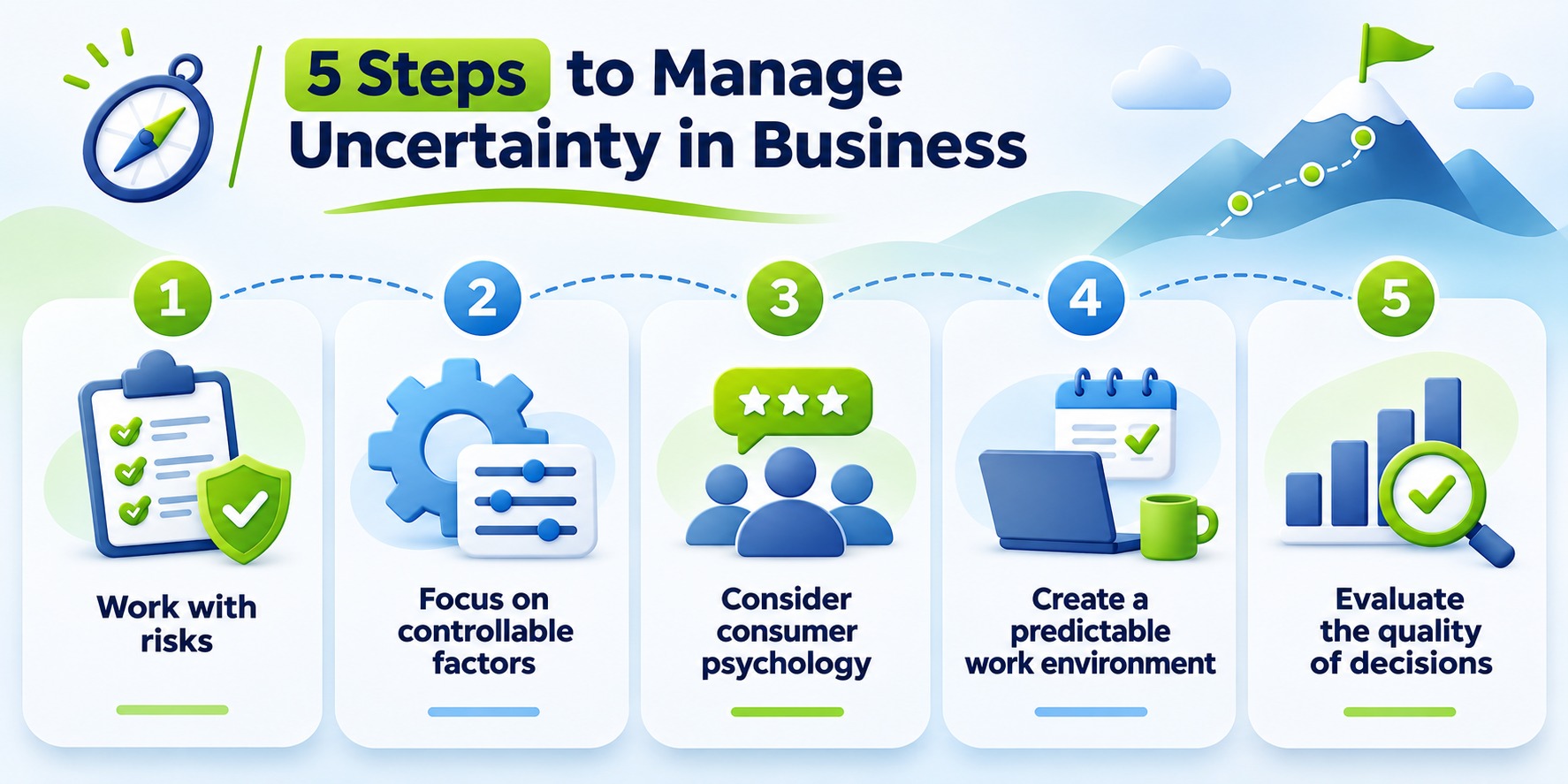
1. Learn to manage risk
Market conditions can change at any time. Instead of trying to predict every event, businesses can prepare for three scenarios: the best case, the most likely case, and the worst case. Each scenario should include a clear action plan and an estimate of potential costs.
Building cash reserves, monitoring cash flow, and developing multiple sources of revenue can reduce financial risks. A financial buffer allows companies to cover essential expenses during periods of low demand.
Small experiments help test new ideas without major investments. For example, a limited product launch can reveal weaknesses, measure customer interest, and provide useful feedback. Practical results often offer more value than lengthy discussions about unlikely threats.
2. Focus on what can be controlled
Businesses have little control over economic trends, inflation, and exchange rates. However, product selection, service quality, purchasing, expenses, and daily operations remain within their control.
Resources should go toward areas where real improvements are possible. Reviewing operating costs, finding alternative suppliers, and automating routine tasks can help companies respond to external changes.
Regular reviews of internal processes also make it easier to identify problems before they become serious.

3. Understand consumer psychology
Customers often choose familiar products, even when new options offer better value. Fear of making a mistake, losing money, or facing unexpected problems can influence purchasing decisions.
Clear payment terms, upfront pricing, reliable reviews, product demonstrations, and trial periods can reduce these concerns. Easy access to information helps customers compare options and builds trust in a brand.
Clear communication is especially important when complaints arise. Businesses should explain how complaints will be handled, how long the process may take, and what solutions are available. A simple return policy can also make customers feel more confident about a purchase.
- Create a stable work environment
Uncertainty about a company’s future can increase stress, reduce productivity, and discourage employees from sharing new ideas.
Regular updates about upcoming changes, clear responsibilities, and fair performance standards help create a stable work environment. Open discussions about challenges without unrealistic promises strengthen mutual trust.
Mistakes made during carefully planned experiments can provide valuable lessons. Harsh penalties for occasional errors may discourage employees from taking initiative. A supportive work culture encourages staff to report problems early and suggest practical solutions.
5. Evaluate the quality of decisions
A good result does not always mean that a decision was sound. A poor outcome may result from events that were impossible to predict.
When reviewing decisions, management teams should consider the information available at the time, the reasons behind each choice, and the balance between potential losses and expected gains. This approach helps distinguish good luck from professional skills.
Business resilience depends not on the absence of difficulties but on the ability to spot risks early, learn from setbacks, and adapt to change. Developing these skills can turn uncertainty from a barrier into an opportunity for long-term growth.